
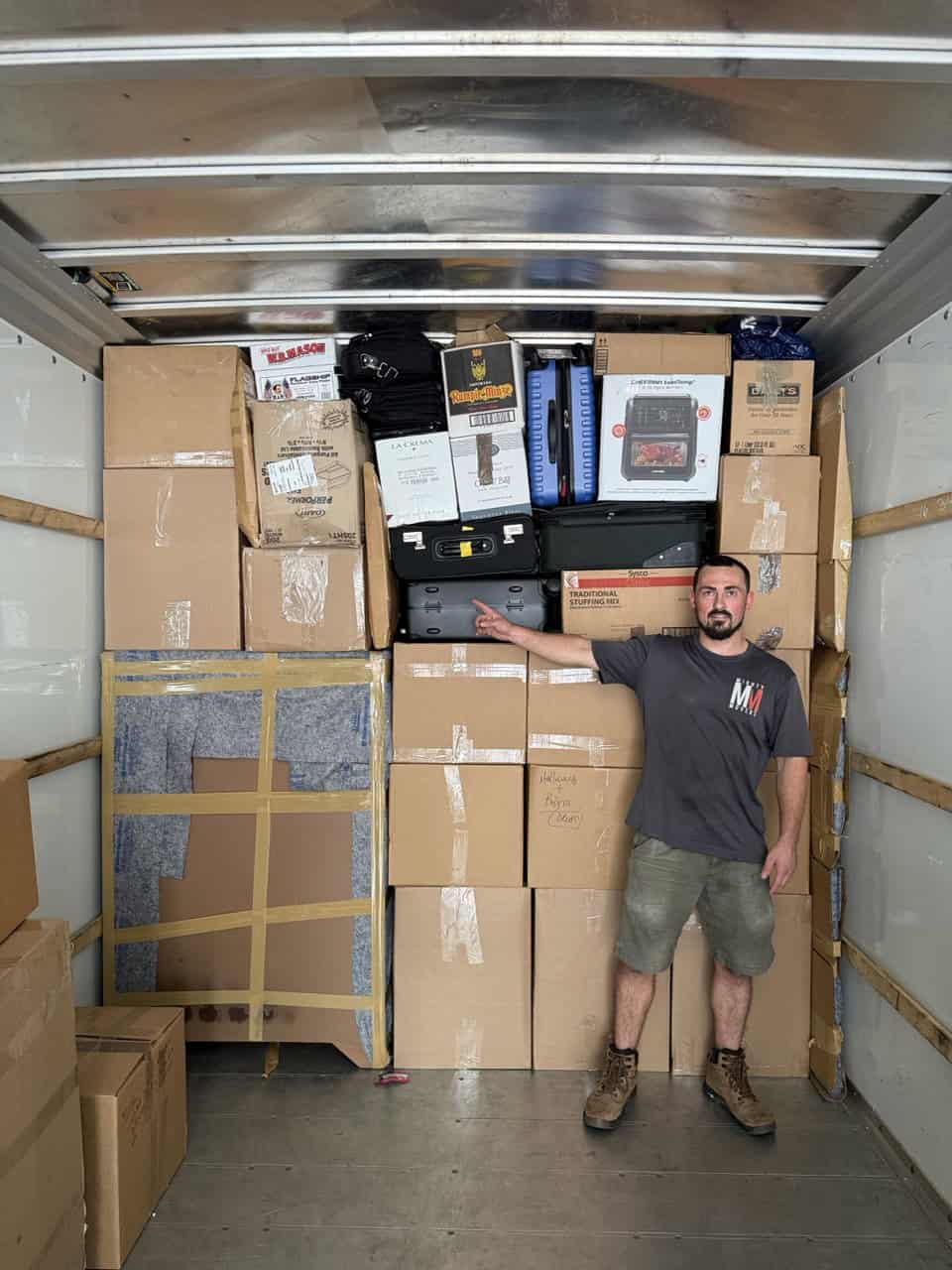
A quote given without checking your belongings or access details may leave out costs. Interstate moving estimates should reflect shipment size, distance, and conditions at both addresses. Those details help you compare written offers before choosing a mover.
Before you book a long-distance mover, request a written estimate based on your belongings. Check whether it is binding or non-binding, what services it covers, and which extra charges may apply. Ask for the mover’s USDOT number, too. Here’s what to review.
What Does an Interstate Moving Estimate Include?
An estimate is a written document, not a verbal figure. It should describe what the mover expects to transport, what services are included, and how the final price will be calculated.
At a minimum, expect to see:
- The origin and destination addresses, with any stairs, elevators, or long carries noted
- A shipment inventory and estimated weight, where applicable
- Packing, unpacking, and materials, listed as included or excluded
- Special handling for items like pianos, safes, or large TVs
- The pickup window and expected delivery window
- Released Value and Full Value Protection options, with any applicable charges
- The payment terms and the accepted forms of payment
If an estimate lists only a total with no breakdown, you cannot tell what you are paying for. Ask the mover to itemize it before you compare it with anything else.
Binding vs. Non-Binding Estimates
Before signing, compare binding vs nonbinding estimates. Federal rules describe these two estimate types for interstate household-goods moves. Some movers also offer binding not-to-exceed terms as a contractual variation. Each arrangement affects how the final charge is determined.
Non-Binding Estimates
A non-binding estimate is the mover’s best calculation based on what it expects to move. The final price is set by the actual weight of your shipment and the services performed. It can come in lower than the estimate or higher.
This type is common, but it carries the most uncertainty for you. If you choose it, make sure the inventory is thorough, because a low estimate built on a short list leads to a bigger bill later.
Binding Estimates
A binding estimate sets the agreed charge for the listed shipment and services. A heavier load alone does not raise that price. If items or services change before loading, you and the mover may reaffirm the estimate or agree to revised terms in writing.
Binding estimates are easier to budget around, but they are only as reliable as the inventory behind them. They also depend on accurate details like stairs and access, since those affect the services included.
Binding Not-to-Exceed Estimates
A binding not-to-exceed estimate generally sets a maximum charge for the agreed shipment and services while allowing a lower bill under the contract’s pricing terms. Ask how the ceiling is calculated and what happens if the inventory or requested services change.
| Estimate type | Can the final price rise? | Can the final price fall? | Best suited for |
|---|---|---|---|
| Non-binding | Yes, based on actual weight and services | Yes | Customers comfortable with some price variability |
| Binding | Not for listed items and services; written revisions or permitted extra charges may apply | Not ordinarily | Customers seeking a fixed charge for listed services |
| Binding not-to-exceed | Not above the agreed cap for covered items and services; check contract terms | Under contract terms | Customers whose mover offers this arrangement |
What Is the 110% Rule?
For a non-binding estimate, the 110% rule generally limits what a mover can require at delivery for the estimated shipment to 110% of the quoted amount. The mover may also collect permitted charges for later-requested services and certain impracticable operations, such as additional delivery arrangements.
This is a payment limit at delivery, not a cap on the final bill. Federal rules generally require the mover to defer billing for charges above the 110% amount for at least 30 days. Review FMCSA’s payment rules before signing.
What Affects Interstate Moving Costs in Massachusetts?
Prices for a move out of Massachusetts vary too much for a single number to be useful. Two households leaving the same town for the same city can receive very different quotes because of what they are moving and how it is packed. What matters is knowing which factors drive the figure so you can check that an estimate accounts for them.
The main drivers are:
- Distance: Longer routes mean more fuel, more driving time, and a longer delivery window.
- Shipment size: Non-binding interstate estimates generally use estimated shipment weight, with final transportation charges based on actual weight and the mover’s tariff.
- Services: Packing, unpacking, disassembly, and storage each add to the total.
- Access: Stairs, elevators, long walks from the truck, and tight streets all add time.
- Timing: Summer and month-end dates may be busier, so ask whether flexible dates affect pricing.
For a move beginning in Marlborough or elsewhere in MetroWest, note driveway access, stairs, and the distance between your door and the truck. For an apartment or condo, ask about loading arrangements and elevator reservations. Check local curbside parking rules if the truck cannot park on the property.
What Can Change Your Moving Quote?
Even a careful estimate can change when the facts change. The most common causes are predictable, which means you can often prevent them.
A larger shipment, added packing services, or access problems can affect charges, depending on your estimate type and written agreement. Tell the mover about a blocked driveway, unavailable elevator, or other access change as soon as you learn about it.
Also watch for fees that should be written into the estimate in advance. These can include a long-carry fee, a stair fee, or charges for bulky items. Ask whether each one applies to your move and how it is calculated.
If you’re planning a move across state lines, you can request a FREE quote from Mighty Movers. Share your inventory and access details so you can discuss the estimate before deciding.
How to Get an Accurate Estimate
Your estimate depends on the details you provide. Start with the belongings you plan to move, then note anything that could affect access or handling at either address.
- Ask for a walkthrough. A mover who sees your home in person, or on a live video walkthrough, can spot things a phone call misses, like a heavy workbench in the basement.
- Prepare an inventory. Go room by room and include closets, the garage, the attic, and storage areas.
- Disclose special items. Mention pianos, gun safes, large artwork, hot tubs, or anything oversized.
- Describe both addresses. Note the floor, stairs, elevators, parking, and the distance from the truck to the door.
- Decide what you will pack yourself. Identify which rooms or items may need professional packing.
Request estimates from more than one company using the same inventory and address details. This makes interstate moving quotes easier to compare.
What Happens When Your Inventory Changes?
Your inventory may change before moving day. Tell the mover when you add or remove items and request any revised terms before loading begins.
With a binding estimate, adding belongings or services does not automatically change the agreed price. Before loading, the mover may reaffirm the original estimate or negotiate revised written terms with you. The parties may also agree in writing to convert the original binding estimate into a non-binding estimate. For a non-binding estimate, final charges depend on actual weight, services, and tariff terms.
Send an updated list, request written confirmation, and keep any revised estimate with your other moving documents.
How to Verify an Interstate Mover
Before booking, ask for the company’s USDOT number and check its registration, interstate operating authority, and complaint history through FMCSA’s mover search. Check whether you’re dealing with the carrier transporting your shipment or a broker arranging the move. Massachusetts DPU oversees moves within the state; FMCSA regulates moves between states.
Beyond registration, look for signs of a legitimate operation:
- A verifiable business address and contact details
- A written estimate rather than only a verbal quote
- Written explanations of valuation options and any separate insurance offered
- Reviews that mention specific details, such as communication and how the crew handled problems
- Clear written payment and deposit terms before money changes hands
Be cautious about any company that avoids an in-person or video survey, gives a price far below every other estimate, or pressures you to book on the spot.
Final Checklist Before Accepting an Estimate
For an interstate moving estimate in Massachusetts, compare more than the total price. Before signing, check:
- Is the estimate binding or non-binding, and are any not-to-exceed terms explained?
- Does the inventory reflect the belongings you’re actually moving?
- Are packing and other optional services clearly included or excluded?
- Are access and specialty-item charges explained?
- Which valuation option is selected, and what does it cost?
- Are pickup and delivery windows clear, including any date guarantees?
- Are deposit, payment, and cancellation terms stated in writing?
Ask for the federally required Your Rights and Responsibilities When You Move booklet. Save the estimate and check the order for service and bill of lading when issued.
Frequently Asked Questions
These questions cover details that may not be obvious from the estimate’s total price.
How far in advance should I request an estimate?
Start several weeks before your move date, and earlier if you are moving in summer or near the end of a month. That gives you time to compare offers and resolve inventory questions without rushing.
Is a free estimate really free?
A non-binding interstate estimate must be free under FMCSA rules. A mover may charge for a binding estimate. Ask which type you’re receiving and whether any permitted fee applies.
Can a mover charge more than the estimate on moving day?
A non-binding estimate can change with actual weight, services, and the mover’s tariff. A binding estimate covers the listed shipment and services, subject to permitted charges and any revised written agreement. Check any not-to-exceed terms in the contract.
Do I need to be home for the estimate?
You or someone you trust should be there for an in-person survey, since the mover will need access to every room. For a video walkthrough, you can show the mover the home yourself.
How are valuation coverage and moving insurance different?
Interstate movers offer Released Value and Full Value Protection, which are valuation options rather than insurance policies. Review both before choosing. If you want separate insurance, compare available policies and check your existing home coverage.
What if I receive a much lower quote than other movers?
Compare the inventory, included services, estimate type, and payment terms. A very low price with missing details is a reason to ask more questions.
Get a Clear Estimate Before You Commit
The best protection on a long-distance move is a detailed written estimate, a fully documented inventory, and a clear understanding of the estimate type. Verify the mover’s registration, confirm each extra charge, and get any changes in writing. Those steps matter more than finding the lowest number.
Planning an interstate move from Marlborough or elsewhere in Massachusetts? Request a FREE quote from Mighty Movers or call +1 978-793-6165 to discuss your moving details.